Tuesday, October 30, 2012

Letter (from and to) The Penobscot Theatre Company Regarding Their decision That Service Dogs Who Tried Out for the Part of "Sandy" in the Play "Annie" are Automatically Disqualified


White Lettering

Q- Did they sayon the "Sandy" application that Service Dogs were not allowed to try-out for the part?

A- No, it did not.  It said "All breeds welcome".

One of the chosen "Sandy" dogs and some of the orphans.


----- Original Message -----
From: bari newport
Sent: Monday, August 20, 2012 11:55 AM
Subject: Penobscot Theatre Company - Sandy Auditions

What a wonderful day Saturday was. I hope you and your doggie had a good, low-stress time of it. 
We ended up seeing 15 dogs of all shapes and sizes. Some dogs were super trained and had super skills and other dogs were goofy but well-behaved, family pets. 
Proof once again that dogs are simply THE MOST AMAZING.

I underestimated how difficult the decision would be! In the end, we narrowed our choices down to five dogs. We did this by eliminating service dogs - they were clearly the most versatile in terms of what they are capable of doing - and certainly they are used to noises and lights, children and excitement - but casting them in a play seems counterintuitive to their role in your life, as you have trained them to do very specific tasks just for you - and it is important that their focus remains as such.

And we narrowed the scope further based on what kind of energy and look the dog had. Incredibly tough decisions. 

I thank you most sincerely for sharing your furry family member with us. You were gracious and kind - and I am humbled to be a part of your community. Thank you.

See you at the theatre! 


Bari NewportArtistic Director
Penobscot Theatre Company
Bangor Opera House - 131 Main Street
Administrative Offices - 115 Main Street, 4th floor
207. 942.3333 (Box Office)
207.947.6618 (Admin)
207.947.6678 (fax)
www.penobscottheatre.org


Coming Up!


PTC SUMMER CAMP, July 2 - August 11

SUBSCRIBE TO OUR 39TH SEASON!

Always. Patsy Cline, September 5 - September 23
Becky's New Car, October 17 - November 4
Annie, December 5 - December 29
The Sugar Bean Sisters, January 30 - February 17
WIT, March 13 - March 31
Around the World in Eighty Days, May 15 - June 2


Rosie and a fellow service dog who also tried out for the "Sandy" role.
Here they are in a sit-stay in the middle of the Bangor Mall.


----- Original Message -----
Sent: Monday, August 20, 2012 12:52 PM
Subject: Re: Penobscot Theatre Company - Sandy Auditions- re: Service Dogs Not Allowed


To Whom it May Concern;
I guess that means we won't be seeing any of you at the Scenes and Songs  night on the 23rd. 
Who told you that casting a service dog would take the focus off of their handlers?  Don?  Why was Don chosen out of all the other very good trainers in the area?  For example, choosing one who actually works with and trains service dogs (AND pet dogs), some of which do have dual roles being a show dog, agility dog, or a competitive duck retrieving dog (to name a few).  That is not Don's expertise.  He wouldn't be the first trainer I would have chosen for the job (but then of course it wasn't my job).  He's also not the only trainer that gives therapy dog tests in the area.  I am pretty sure Don had said allowing service dogs to take the coveted role of Sandy was not a good idea since he probably uses ADI's therapy dog test. (ADI believes service dogs can't/ shouldn't be therapy dogs because they would be confused about their roles).  Not to mention I really think he knows very little about service dogs in general.  Thousands of service dog handlers all over the US would beg to differ with their opinion.  The organization has also been known to take away certification from service dogs that had previously passed their therapy dog tests, and had been working as therapy dog already. (They have actually done this for other various, unfound reasons with assorted other dogs). After nearly 8 years of training and testing (and note: not with Don) and spending 24 hours a day with my dog, I would know my dog better than Don.
I guess most of all, I feel cheated (for my dog) of a fair chance at the Sandy role.  If I thought we couldn't handle this job together I would not have bothered to come in.  It could be my dog never had a chance, but after the comments from the woman who escorted me out of the theatre and invited me to the event on the 23rd, I thought we had a good shot.
To say the least, I am disappointed.  Not because my dog did not get the role, but that just because she is a service dog, she didn't even have a fair chance.  I had expected disappointment if my dog didn't get the role.  This just brought it to a new level of disappointment.
As the ADA says about people with disabilities in the workplace, if I have the qualifications, and without my disability I would have been hired for the job, but because of my disability, the employer won't even consider hiring me,  that is discrimination. Now my dog is disqualified because she's a service dog and I am her disabled handler.  She may be qualified, but because I am disabled and her job is to assist me, she doesn't have a chance. To me, it just feels like another "access denied". 

What if I decided to try out for a part in a play that you all were putting on?  Would you say no because I have a service dog and she would not be near me if I was in a play?  OR would you say no because I am disabled.  Period.  Think carefully.  If you choose wrong, you could have some legal problems arise.
Next time, maybe you should say right on the form that service dogs are not allowed to audition.  You may get a few angry responses from that, but at least the person could save some energy and not bother with the application and audition process.
Sorry if I sound harsh at all, but feelings were hurt here.
Thank you for your time,
Sincerely,
Heather Gerquest
helgerquest@msn.com
----------------------------------------------------------

ADDENDUM----


Since the try-outs for the "Sandy" role, I attended the Paws on Parade fundraising event in Bangor, Maine.  It was there that I heard your dog trainer talking to another person saying he did not know how medical alert dogs work, such as a Diabetic Alert dog or Seizure Alert dog, not even the cancer sniffing dogs.  I thought every trainer knew this, or at least would have wanted to find out years ago when some of these types of service dogs came about.  So this guy is supposed to understand individuals with disabilities, their service dogs and the Americans with Disabilities Act, ADA (Newly revised) as well?  Does he even know about the Americans with Disabilities Act is?


And the above photographed chosen dog, a dog training friend of mine said the dog looked anxious when she tried out, that she even ran off the stage.  In this photo it was suggested that the dog was showing some anxiety from turning away from everyone, and I saw an inability to follow any commands.  I also think she was overheated and needed some water, or maybe the panting was another way she was showing her anxiety, but that is not what I am concerned about.


Re: Rosie's birthday video

What a lovely tribute to a lovey dog.
-deb and eowyn


On 8/26/2012 8:54 PM, Heather Gerquest wrote:

Hi everyone!  It's Heather and Rosie in Maine.  I thought you all would enjoy seeing Rosie's 8th birthday slideshow!  I hope everyone is well!
Take care,
Heather Gerquest and (Jaydens) Rowena
Bangor, Maine

--   Deborah Eve Rubin  Eowyn ( http://www.dogster.com/dogs/1113559 )  Toby ( http://www.dogster.com//?411209 )          

Friday, August 17, 2012

Diseases Caused by Flea & Tick Bites in Canines

This article was compiled after I read something on Facebook about a border collie who died of kidney failure as a complication of Lyme Disease.  Lyme Disease is caused by tick bites and can be prevented.  Lyme disease is a very debilitating disease that attacks the dog's immune system and causes chronic joint pain.  Though kidney failure is one of the rare complications from Lyme disease, the fact that that one dog's early death (I think she was 4 years old) could have been avoided really angered me.  The owner of the border collie stated that even though he was always giving them flea and tick baths, they'd still get ticks.  This man is an avid mountain biker in the Pacific Northwest and took his dogs on many of his outings.  Baths do not prevent fleas and ticks, it kills the ones that are already on the dog.  He could have done flea and tick collars, Frontline Plus or a similar topical, brushing and combing following outings to try to get all the ticks off, powder, diatamacious earth (sp)... he chose to do nothing. He had options.  Options that were far less expensive then the poor dog's last days and extended vet visits.  Life saving options.  My question is this:  "How much did he really love his dog?"  And  "Did he learn from this?"  "Will he take care of the surviving dog?"

This is the dog... Rest in Peace you beautiful girl.

I want to start this article by saying that Prevention is the best medicine in the case of parasites of all types.  Do not wait for a tick to bite.  If a tick has bitten, it has already infected your dog. With the many types of preventatives and repellents, keeping our dogs and cats parasite free is made easier. What is out there?

1- Flea/Tick collars- Hartz etc., New long-term flea/tick collars
2- Flea/Tick Repel Shampoos- Hartz etc.
3- Internal preventatives- Comfortis, Heartguard, Interceptor, Trifexis
4- External preventatives- Frontline, Advantix...
5- Flea/Tick Sprays and "Bombs"

One could use more than one of these products for increased protection.  Talk to your Veterinarian about Flea/Tick (and other parasites) protection for your animal.  

 Flea and Tick-Borne Diseases in Dogs:  Preventable Risks


FLEA ALLERGIES-
Fleas are frequently the culprit of many itchy dogs and cats, and result in Flea Allergy Dermatitis in some animals.  My dog has been prescribed "Comfortis" which is a montly oral drug to keep fleas from biting, used in conjunction with Frontline Plus or the likes which is a montly topical.  When she is suffering a lot, she is given antihistamines (orally) and I put Hydrocortisone on any rashes she may have on her. 

Flea Life Cycle by:
http://www.doyourownpestcontrol.com/fleas.htm


TYPES OF TICKS
Photographs of Ticks from:
http://www.tickinfo.com/index.htm


American Dog Tick- AKA Dog Tick, Wood Tick
Diseases related to the American Dog Tick are: Rocky Mountain Spotted Fever, Tuleremia, Human Granulocytic Erlichiosis


Brown Dog Tick


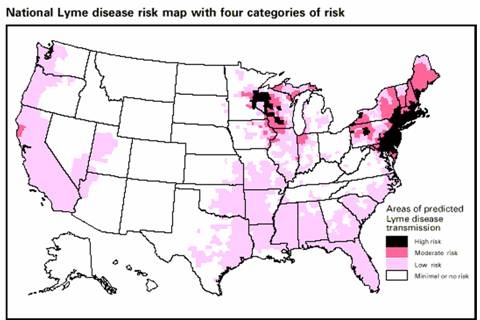
Deer Tick- AKA the European Wood Tick AKA Sheep Tick,  Western Black Legged tick AKA Bear Tick, Black Legged Tick AKA Deer Tick
Diseases related to the Deer Tick:  Lyme Disease, Babesiosis, Erlichiosis/Anaplasmosis.


Gulf Coast Tick-


Rocky Mountain Tick- Diseases related to this tick: Rocky Mountain Spotted Fever, Tuleremia, Colorado Tick Fever, Major cause of Tick paralysis.


Lone Star Tick- AKA Seed Tick

Diseases related to the Lone Star Tick are:  Tuleremia, Rocky Mountain Spotted Fever, Southern Tick Assisted Rash Illness (STARI)
Named Lone Star for the white spot or star on the center of the back of the female.


Flea and Tick-Bourne Illnesses

1) Lyme Disease (Borreliosis)- spread by the Deer & Dog Ticks,
Onset of symptoms can be 2 months- 5-6 Months.  Lyme is the most common tick-bourne disease.  Its symptoms are: Sudden onset of lameness, swelling in the joints, that is often accompanied by fever, anorexia and lethargy.  Renal failure caused by Lyme disease has the following symptoms:  Lethergy, vomiting, change in urine output, (and increase of fluid intake).  Also look for weightloss, decrease of appetite,  and apathy.  Rare complications that may result in Lyme disease are renal failure, neurological and heart damage.  Lyme disease is easily preventable.  By using a topical Flea & Tick preventative like Frontline Plus, Pet Armor, Advantix or the likes usually do a really good job at deterring fleas and ticks.  With my dog, when we have traveled to high tick areas, I may find a couple of ticks on her, but they never bite and never look like they will last much longer.  I get my topical Flea & Tick preventative from my vet.  Walmart sells Pet Armour for $26.  It is about $10 to get only a single dose.  Also available is a Lyme vaccine and during my dog's annual heartworm test, she is tested for Lyme disease and some other diseases spread by flea and tick bites.  If you add a flea & tick collar to all of that, your dog ought to be bombproof.

2) Rocky Mountain Spotted Fever- a bacteria spread by flea & tick bites,
There are multiple strains of Rocky Mountain Spotted Fever (or Rickettsiae).  Those strains are:  Typhus, Rocky Mountain Spotted Fever,  flea-bourne spotted fever and tick-bourne fever.  Diagnosis depends on the strain of the disease and the associated illness

3) Meningoencephalitis-
Is an inflammatory disease that can be caused by many tick-bourne viruses.  It affects the brain and spinal cord along with the surrounding membranes resulting in:  a loss of nervous system function, fever, pain, convulsions, and paralysis.  A rapid onset disease that can be fatal.  This disease can be diagnosed by a spinal tap, Treatment of antibiotics and anticonvulsants if it is caused by a tick-bourne virus.

4) Tularemia (Rabbit Fever)
Symptoms are Lethargy, fever, loss of appetite, enlarged lymph nodes.  This disease is difficult to diagnose, but if caught early, treatment can be successful.  Treatment for this disease is antibiotics.

5) Tick Paralysis- spread by the Rocky Mountain Wood Tick & the American Dog Tick,
There are toxins within the tick's saliva capable of causing paralysis in dogs.  Initially the legs will go weak.  If untreated, this can spread to the torso.  Usually removing the tick will resolve the paralysis.  However, if the tick is not removed correctly it can be fatal.

6) Canine Erlichiosis/Anaplasmosis- spread by the Brown Dog Tick, Deer Tick
This disease is an infection that destroys white blood cells in the body of the host.  Symptoms of this infection can be lethargy, weight loss, anemia, and enlarged lymph nodes and spleen.  It is diagnosed with blood tests and is usually responsive by aggressive treatment with antibiotics called Doxycycline.

7) Babesiosis- Spread by the Brown Dog & American Dog Ticks
Puppies seem to get this disease more frequently than dogs, and with more severe symptoms.  Those symptoms can include: lethargy, fever, enlarged lymph nodes.  It can be treated by antibiotics.  some dogs become carriers, thus infecting more ticks and spreading the disease.

8) Tapeworms- spread by fleas,
This is a parasitic flatworm transmitted by fleas.  It is ingested during grooming.  The worm lives in the digestive tract of the host, and will shed its reproductive segments (called proglottids) that then passed  through and out of the body by feces of the  host.  These worms are visible to the naked eye which makes it easy to diagnose.

9) Canine Bartonella- a Parasite spread by fleas & ticks,
The parasite attaches to red blood cells.  There is usually no sign of illness.  Rarely, the host could become anemic resulting from the excessive breakdown of affected red blood cells.


DEFINITIONS OF KEY WORDS:

Red blood cells- Erythrocyte
contain the pigment called hemoglobin,  which imparts the red color to blood and transport oxygen and carbon dioxide to and from the tissues of the body.

White blood cells- Leucocyte
A colorless cell which circulates in the blood and body fluids and is involved in counteracting foreign substances and disease.

Lymph nodes-
Each of a number of mall swellings in the lymphatic system of the body where lymph is filtered and lymphocytes are formed.

Lymphatic System- 
The network of vessels through which lymph drains from the tissue into the blood.

Lymph-
A colorless fluid containing white blood cells which bathes the tissues and drains through the lymphatic system into the bloodstream.  It is fluid exuding from a sore or inflamed tissue.

Parasite-
An organism which lives in or on another organism (it's host) and benefits by deriving nutrients at the other's (host) expense.

Ectoparasites-
Parasites that live on the surface of their host, such as fleas, ticks, mites, lice and many insects infesting plants and cause varying degrees of damage to their hosts.

Endoparasites-
Parasites that live in the gut or tissues of it's host.  This includes many types of worms, like the tapeworm, heartworm, and cause varying degrees of damaage or disease to the host.

Bacterium- Singular form of Bacteria.
A member of a large group of unicellular micro-organisms which have cell walls, but lack organelles and an organized nucleus, including some which can cause disease.

Virus-
An infective agent that typically consists of a nucleic acit molecule in a protein coat, is too small to be seen by light microscopy, and is able to multiply only within the living cells of a host.  Example:  The Hepatitis B Virus.

Heartworm Disease- Caused by Mosquito Bites
 
Heartworms are very preventable.  Prevention, compared to the treatment after infestation, is inexpensive and easy.  Treatment however, though possible, is complicated and expensive, and takes weeks for the animal to recover.  Some animals have a  negative reaction to the medication and don't make it through treatment.
Heartworm infestations may not be detected in a dog who is only in the early stages.  As the number of worms accumulates over time (from months to years) and as the dog is bitten by more mosquitos, the infestation becomes gradually noticeable.  A Heavily infected dog will show the symptoms of the Heartworm infestation that is growing inside of his/her body.  The dog may have signs such as a mild and persistant cough, wheeze, hesitation to move and exercise because of fatique, reduced appetitie and weight loss.
Diagnosis- For dogs appearing to be healthy, Heartworms can be diagnosed by a bloodtest, Antigen/Microfilariae, although neither test will test consistantly positive until 7 months after the infection.
In dogs more advanced with Heartworm disease, a diagnosis can  be made by ultrasound and/or X-Ray.
Prevention is easy and very effective if you can stay on schedule with the preventative medication.  These preventions can come in the form of monthly chewables or topicals to 6- month injections.  Veterinarians reccommend testing for heartworm on a yearly basis, such as during your dogs annual exam.  One such test also checks for other parasitic infestations related to flea or  tick bites, including Lyme.  Typically a vet will not give you heartworm preventatives (by script)  if you do not get your dog tested first.  Every year my dog gets tested, and the vet will prescribe her Interceptor for the year til her next appointment a year later.


Heartworms in the Pulmonary Artery of a dog.
Photograph of Heartworms from:
http://www.heartwormsociety.org/pet-owner-resources/heartworm.html#signs


WARNINGS:
Before you use more than one preventative on your pet, check with your animal's vet.  Some animals are chemical sensitive and may need to use one very specific type of flea/tick/worm remedy.

Ivermectin Alert:
Some collie-type breeds are sensitive (it is caused by a genetic mutation) to products with Ivermectin (a widely used Heartworm remedy) in them.  Before you know if this includes your collie-type dog, use an alternative.  There is a blood test that can be taken to tell if your dog carries that affected (collie-type) gene.  Death can occur if your collie-type dog ingests Ivermectin or products containing Ivermectin.  (Collies, Shelties, Border Collies, Kelpies, Australian Shepherds)

The Resources I used:

http://www.lakelandveterinaryhospital.com/Anaplasmosis.htm
http://www.petplace.com/dogs/the-dangers-of-ticks-in-dogs/page1.aspx
http://www.petcarerx.com/c/96/flea-tick/faqs/what-diseases-are-caused-by-ticks
http://www.vetinfo.com/7-diseases-spread-by-fleas-and-ticks.html
http://www.tickinfo.com/index.htm
http://www.grca.org/health/flea_tick.html
http://www.petparents.com/riskmap.aspx/index#
http://www.heartwormsociety.org/pet-owner-resources/heartworm.html#signs

If you want to know more, the above links may help you!